 Hawai'i Advocacy
Hawai'i Animal Advocacy - SNAPSHOT BRIEF
Did you know?
.
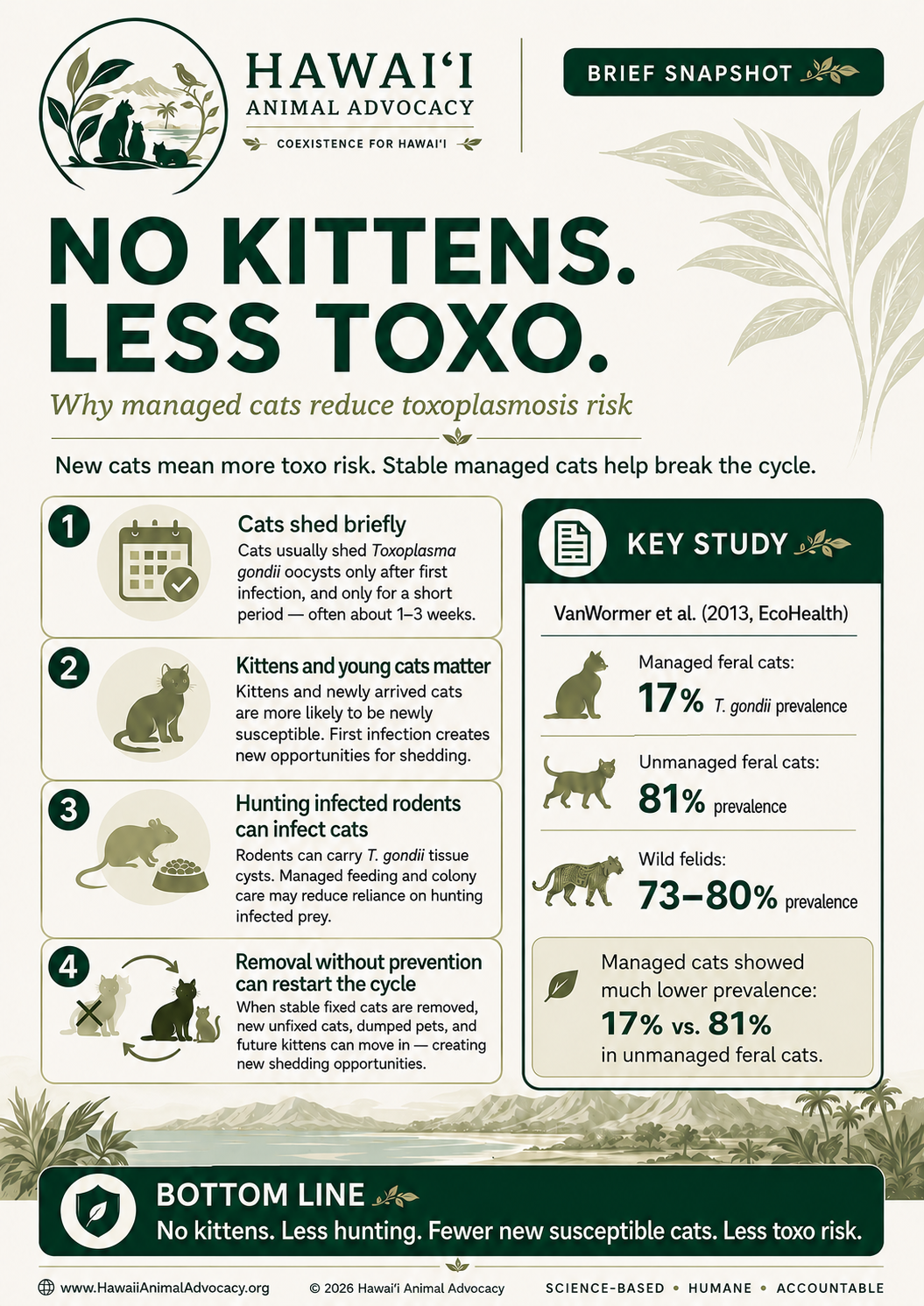
One of the most effective ways to reduce toxoplasmosis risk in the environment is to stop the cycle that creates new susceptible cats.
.
Cats, as the definitive host, usually shed Toxoplasma gondii oocysts only once in their life, after their first infection, and only for up to about two weeks.
.
That means the concern is not simply the presence of cats, but the increased risk that comes from new cats entering the cycle — especially kittens and young cats who have not been exposed before.
.
This is why sterilization and managed colony care matter.
- When cats are fixed, they do not produce kittens,
- When cats are fed and monitored, they may rely less on hunting toxo-infected rats, though feeding does not eliminate hunting,
- When stable managed cats remain in place, they can reduce the chance that new uninfected, unfixed cats, abandoned pets, and future kittens move into the area.
.
Removal without ongoing prevention can restart the cycle.
.
A California coastal study found that managed feral cats had much lower T. gondii prevalence than unmanaged feral cats — about 17% compared with 81%.
.
The takeaway is simple:
.
No kittens. Less hunting. Fewer new susceptible cats. Less toxo risk.
.
This is what science-based community cat management looks like. It is not about ignoring public health.
.
It is about using the tools that actually reduce risk over time.
.
.
www.HawaiiAnimalAdvocacy.org